Why Sweetest Is the Handwritten Font That Makes Your Projects Feel Human
In a digital landscape dominated by rigid grids, sterile sans-serifs, and algorithmically perfect typography, there is a distinct hunger for something that feels authentic. We are constantly scrolling past content that looks like it was generated by a machine or assembled in a corporate boardroom. This is where Sweetest steps in. It is not just another typeface; it is a handwritten font designed to inject playfulness and warmth into your work. Whether you are a small business owner trying to connect with local customers or an educator looking to make learning materials more engaging, this font offers a solution that goes beyond simple aesthetics.
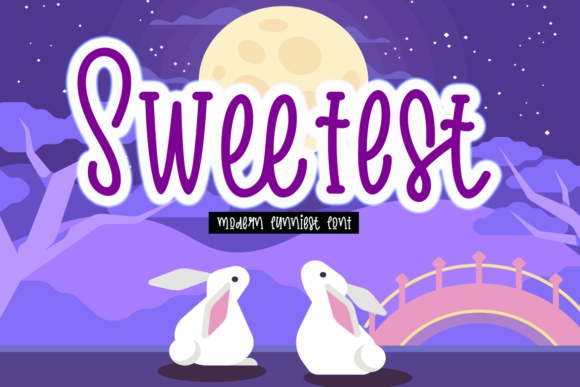
Sweetest embodies the charm of a quick note scribbled on a sticky pad or a drawing made by a child's hand. Its strokes vary slightly in weight and angle, mimicking the natural imperfections of human handwriting. This characteristic is its superpower. In a world where everything feels automated, that slight irregularity signals trust. It tells the viewer, "A real person made this." For creators, entrepreneurs, and educators, leveraging this feeling can be the difference between a project that gets ignored and one that resonates deeply with an audience.
The Psychology of Playful Typography
Why does a font matter so much? The answer lies in psychology. When users encounter a perfectly uniform font, their brains often categorize it as formal, distant, or commercial. Conversely, a handwritten style like Sweetest triggers a different response. It lowers defenses and invites interaction. Think about the last time you received a birthday card with a printed message versus one with a handwritten note. The latter always carries more emotional weight.
This dynamic is crucial for anyone looking to build a brand or teach a concept. If you are designing a flyer for a community event, using a standard Arial or Helvetica might look professional but forgettable. Swapping in Sweetest changes the tone immediately. It suggests that the event is fun, accessible, and friendly. It transforms a piece of marketing material from a "sales pitch" into an "invitation."
Real-World Applications for Creators and Entrepreneurs
The versatility of Sweetest makes it applicable across a wide spectrum of industries. Let's look at how different professionals are actually using it to solve specific problems.
- Small Business Owners: Imagine you run a boutique bakery or a local craft shop. Your logo might be clean and modern, but your social media graphics need to feel personal. Using Sweetest for captions, special offer tags, or seasonal greetings creates a cohesive narrative of a "mom-and-pop" shop that cares. It humanizes the brand without requiring a complete rebranding.
- Bloggers and Content Creators: If you write about lifestyle, parenting, or hobbies, your voice is likely conversational. A rigid font can clash with your writing style. Integrating Sweetest for pull quotes, headers, or call-to-action buttons reinforces your authentic voice. It breaks up the monotony of large blocks of text and keeps readers engaged.
- Freelancers and Designers: When pitching to clients who want a creative edge, presenting a proposal with Sweetest used strategically (perhaps for titles while keeping body text readable) shows attention to detail and a willingness to think outside the box. It demonstrates that you understand the nuance of visual communication.
Educational Settings: Making Learning Stick
For educators, parents, and homeschoolers, engagement is the hardest currency to spend. Children, in particular, respond better to materials that do not look like textbooks. Sweetest is the perfect choice for any children activity or school project because it mirrors the way they see the world—colorful, imperfect, and full of wonder.
Consider a teacher creating a worksheet for a science experiment. If the instructions are written in a stiff, formal font, students might tune out. However, if those same instructions are presented in Sweetest, the task feels like an adventure rather than a chore. It works exceptionally well for:
- Flashcards and Quizzes: Turning study aids into game-like elements helps retention.
- Classroom Decor: Labeling bins, posters, and bulletin boards with a friendly font reduces the intimidation factor of a new environment.
- Parent Communication: Newsletters sent home from teachers can feel more approachable and less bureaucratic when using a handwritten style.
The authenticity of Sweetest bridges the gap between authority figure and friend, making the educational experience more inviting for young minds.
Digital and Commercial Use Cases
Moving beyond print, the applications for Sweetest extend into the digital realm. In web design, mobile apps, and e-commerce, readability is key, but personality is what drives conversion.
Picture an online store selling handmade jewelry or organic toys. The product images are beautiful, but the descriptions are dry. By using Sweetest for product titles, price tags, or "Add to Cart" buttons, the site gains a tactile quality. It simulates the feeling of holding a physical item in your hands. This subtle shift can increase the perceived value of the product and foster a sense of connection with the buyer.
Furthermore, for marketers running email campaigns, subject lines set in Sweetest stand out in a crowded inbox. While most emails use standard system fonts, a unique header catches the eye. It signals that the content inside is curated with care, not mass-produced. This increases open rates and click-throughs, directly impacting the bottom line.
What to Consider Before You Download
While Sweetest is a powerful tool, it is not a magic wand that solves every design problem. To get the best results, users must apply it with intention. Here are some practical considerations before you start incorporating it into your projects.
Readability is Paramount: Because Sweetest mimics handwriting, it can sometimes be harder to read at very small sizes or in long paragraphs. The best practice is to use it for headlines, short phrases, labels, and emphasis. Reserve standard, highly legible sans-serif fonts for body text. Mixing these two styles creates a balanced hierarchy that guides the reader's eye effectively.
Context Matters: Not every situation calls for playfulness. If you are designing a financial report, a legal contract, or a medical brochure, Sweetest would likely undermine the seriousness of the content. Save it for contexts where emotion, creativity, or approachability is the primary goal. Understanding the audience is the first step in choosing the right typeface.
Consistency Builds Trust: One of the biggest mistakes designers make is mixing too many fonts. If you decide to use Sweetest, pair it with a clean, neutral font that complements rather than competes with it. This ensures that the playful nature of Sweetest shines through without creating visual chaos. Consistency in your typography choices helps establish a recognizable brand identity.
Maximizing Impact Through Strategic Application
The true power of Sweetest comes from knowing when to use it. It is not about replacing all other fonts; it is about adding a layer of personality where it counts. For instance, a wedding invitation suite could use Sweetest for the couple's names and the date, while using a classic serif for the details. This contrast highlights the most important information while setting a romantic, personal tone.
Similarly, for hobbyists creating scrapbooks or custom gifts, Sweetest allows them to replicate the look of a journal entry without needing calligraphy skills. It democratizes the ability to create high-quality, personalized designs. Users don't need to be graphic design experts to make their projects look professional and heartfelt; they just need to know how to leverage the right tools.
Ultimately, Sweetest is more than a font file to download. It is a strategy for connecting with people. In a world that often feels cold and transactional, choosing a font that says "hello" can change the entire perception of your work. Whether you are launching a startup, teaching a class, or simply sharing a story with friends, Sweetest provides the perfect vehicle to deliver your message with warmth and authenticity.
By focusing on real-world scenarios and understanding the emotional impact of typography, you can transform ordinary projects into memorable experiences. The next time you sit down to design, ask yourself: "Does this need to be serious, or does it need to be sweet?" If the answer leans toward the latter, Sweetest is ready to help you tell your story.