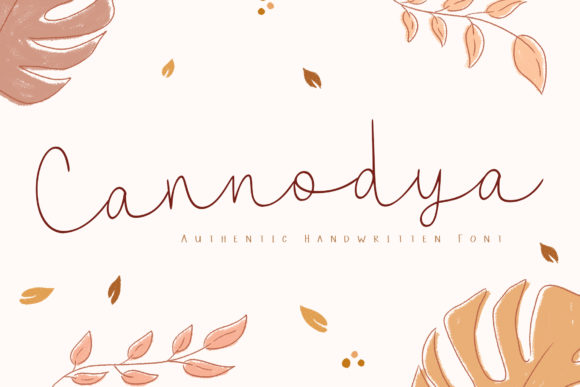
Why Cannodya Is the Handwritten Font You Need for Authentic Design
In a digital landscape saturated with rigid, uniform typefaces, finding a font that truly feels human is often a challenge. This is where Cannodya steps in as a standout choice. It is a delicate and thin lettered handwritten font designed to bring warmth and personality to any project. Unlike standard scripts that can feel stiff or overly decorative, Cannodya mimics the natural flow of a fine-tip pen, making it an ideal tool for creators who want their work to feel personal and intimate.
Many designers and business owners initially overlook the importance of typography when trying to establish a brand voice. They might choose a font simply because it looks modern, failing to realize that the wrong script can alienate their audience. When you are designing wedding invitations, thank you cards, or greeting cards, the texture of the lettering matters more than the size. Cannodya offers that specific texture without overwhelming the content. Its thin strokes ensure that even long messages remain legible while maintaining an elegant aesthetic.
The Hidden Pitfalls of Choosing Script Fonts
Selecting a handwritten font like Cannodya seems straightforward, but there are several common mistakes that can ruin a design before it is even printed. One of the most frequent errors is ignoring the weight of the font. Because Cannodya is a delicate and thin lettered font, using it on a busy background or at a very small size can make the text disappear completely. If you apply this font to a logo intended for use on a business card, you must ensure the contrast is sufficient; otherwise, the recipient may struggle to read your contact information.
Another critical misunderstanding involves the context of application. While Cannodya is stunning on wedding invitations, it is not universally suitable for every type of document. Using such a fluid, handwritten style for legal contracts, technical manuals, or dense blocks of body text is a significant misstep. The irregular nature of handwritten fonts reduces readability when readers need to scan information quickly. Professionals often make the mistake of applying Cannodya to headers and then expecting it to carry the weight of entire paragraphs. This leads to reader fatigue and a lack of clarity in communication.
There is also the issue of licensing and file formats. Beginners sometimes download a font they love, only to find out later that they cannot use it commercially. Before downloading Cannodya, you must verify the license terms. Are you allowed to use it for client work? Can you embed it in a website? Failing to check these details can lead to costly legal issues or the need to redesign projects after they have been sent to print. A professional approach involves understanding the usage rights immediately to avoid rework and wasted budget.
Common Mistakes That Undermine Your Design Quality
- Ignoring Kerning and Spacing: Thin fonts like Cannodya require careful spacing between letters. If the kerning is too tight, the delicate strokes will merge into a blurry mess. Conversely, if the tracking is too loose, the connection between letters breaks, destroying the "handwritten" illusion. Always adjust spacing manually rather than relying on default settings.
- Overusing Decorative Elements: Some designers try to compensate for the thinness of Cannodya by adding excessive shadows, outlines, or drop effects. This clutters the design and detracts from the elegance of the original typeface. The beauty of Cannodya lies in its simplicity; let the font speak for itself.
- Mismatching Pairings: A common error is pairing Cannodya with another script font. This creates visual chaos and makes the design look unprofessional. Instead, pair Cannodya with a clean, sans-serif font like Helvetica or Roboto. The contrast between the organic script and the structured geometric typeface creates a balanced and sophisticated look.
- Neglecting Print Resolution: When preparing files for printing, especially for high-end stationery, resolution is key. A thin font can break up if the vector data is not crisp. Ensure your export settings maintain high fidelity to preserve the integrity of the delicate lines.
How to Maximize the Potential of Cannodya
To avoid these pitfalls, you need a strategic approach to implementation. Start by defining the emotional goal of your project. Are you trying to convey intimacy, creativity, or a personal touch? If the answer is yes, Cannodya is likely a strong candidate. However, if the goal is authority or speed, consider reserving Cannodya for accents only, such as a signature line or a highlighted quote.
For logos and business cards, test the font at various sizes. A logo needs to be recognizable at the size of a favicon as well as on a billboard. Since Cannodya is thin, ensure that the negative space around the letters remains clear. Do not crowd the elements together. This breathing room allows the eye to appreciate the curves and flourishes of the handwriting style.
When creating quotes or social media graphics, leverage the emotional resonance of the font. Use Cannodya to highlight key phrases within a larger block of text set in a neutral font. This technique draws attention to the message without sacrificing readability. For example, a motivational quote on a blog post header could feature the main subject in Cannodya, while the supporting text remains in a readable serif or sans-serif typeface.
Education is also part of the process. If you are teaching a class or creating educational materials, understand that students respond better to content that feels approachable. Using Cannodya for headings in course materials can reduce the perceived difficulty of the topic. However, always keep the body text simple to ensure comprehension.
Checklist Before You Download and Use
- Verify the License: Confirm whether the font is free for commercial use or requires a purchase. Check if attribution is needed.
- Test Legibility: Write a full sentence with the font and view it at 50% scale. Does it remain clear?
- Check Character Set: Ensure the font includes all necessary symbols, punctuation marks, and special characters (like accented letters) if you plan to write in multiple languages.
- Review Contrast Options: Determine if you have enough background contrast available for the thin strokes to stand out effectively.
- Pairing Test: Create a mockup combining Cannodya with your primary body font. Does the combination look cohesive or chaotic?
By paying attention to these details, you can harness the power of Cannodya to elevate your designs. Whether you are a freelancer looking to impress clients with custom branding, a small business owner wanting to create memorable packaging, or a hobbyist crafting unique gifts, this font provides the perfect blend of style and function. Avoid the temptation to force it into every corner of your project. Instead, use it where it shines brightest—where a handwritten touch can make the difference between a generic template and a personalized masterpiece.
Remember, the goal of typography is communication. When used correctly, Cannodya bridges the gap between digital precision and human emotion. Take the time to evaluate your specific needs, respect the limitations of the thin stroke weight, and pair it wisely. With these precautions in mind, you will produce work that is not only visually stunning but also effective and professional.