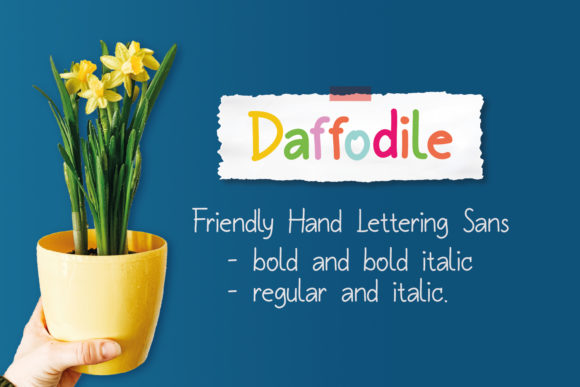
Daffodile: The Friendly Handwritten Font for Modern Brands
In a digital landscape saturated with rigid grids and uniform sans serif fonts, Daffodile offers a refreshing breath of air. It is not just another typeface; it is a design asset that bridges the gap between professional polish and personal warmth. As a simple and friendly handwritten font, Daffodile maintains its classy calligraphic influences while feeling contemporary and fresh. This unique duality makes it an exceptional choice for anyone looking to add character to their work without sacrificing readability or sophistication.
Whether you are a small business owner crafting a brand identity or a creative director designing editorial layouts, the versatility of Daffodile allows it to adapt seamlessly to your specific needs. It captures the essence of human touch in a world that often feels automated, making it ideal for letterheads, titles, stationery, and much more.
Understanding the Personality of Daffodile
At first glance, Daffodile appears to be a casual script, but a closer look reveals a structured elegance. Unlike chaotic brush scripts that can be difficult to read, this handwritten font retains a consistent baseline and legible letterforms. The strokes mimic the natural flow of a pen on paper, yet they are refined enough to hold their own in high-stakes commercial environments.
The visual characteristics of Daffodile are defined by its fluidity. The curves are soft and inviting, while the terminals show subtle variations that suggest a hand-drawn origin. This creates a personality that is approachable yet authoritative. It does not scream for attention like some display fonts; instead, it whispers confidence. When used correctly, it transforms a standard document into something that feels curated and thoughtful.
This balance is crucial for modern branding. Consumers today crave authenticity. They want to feel connected to the people behind the logo. A serif font might offer tradition, and a clean sans serif font might offer neutrality, but Daffodile offers connection. It signals that there is a human element involved in the creation of the product or service.
Where This Creative Font Shines
The applications for Daffodile are as diverse as the projects it serves. Its primary strength lies in its ability to function effectively across both print and digital mediums. Here is how designers and marketers are leveraging this premium font:
- Brand Identity: Use Daffodile for logos where a personal touch is essential. It works exceptionally well for boutique agencies, lifestyle brands, and artisanal businesses. The font adds an immediate layer of trust and intimacy.
- Packaging Design: On product labels, especially for food, cosmetics, or handmade goods, Daffodile elevates the perceived value. It suggests quality ingredients and careful craftsmanship, distinguishing the product from mass-market competitors.
- Editorial Design: For magazines, blogs, and books, using Daffodile for pull quotes, chapter headings, or feature titles breaks up dense text and guides the reader's eye. It adds rhythm to the page without disrupting the flow of the main body copy.
- Social Media Graphics: In a feed dominated by stock photography and corporate messaging, a post featuring Daffodile stands out. It is perfect for event invitations, promotional banners, and Instagram stories where engagement relies on emotional resonance.
- Stationery and Invitations: From wedding invites to corporate letterheads, the font brings a sense of occasion. It turns mundane correspondence into memorable experiences.
Strategic Typography for Better Engagement
Choosing the right typeface is rarely just about aesthetics; it is a strategic decision that impacts user experience and brand perception. Daffodile influences how an audience interacts with your content by establishing a clear visual hierarchy. When paired with a neutral supporting font, such as a geometric sans serif, Daffodile naturally draws the eye to key information.
This dynamic helps guide the reader through a narrative. For instance, in a marketing email, a headline set in Daffodile can capture attention instantly, while the body text remains easy to scan. This combination ensures that the message is not only seen but understood. Furthermore, consistency in using Daffodile across different platforms reinforces brand recognition. When customers see the same handwriting style on a website, a business card, and a product box, it builds a cohesive and professional image.
Readability is another critical factor. While many script fonts sacrifice clarity for style, Daffodile prioritizes legibility. This means it can be used for slightly longer phrases or short paragraphs without causing eye strain. However, it is important to remember that even the most readable script should be used sparingly for maximum impact. It is best reserved for headlines, accents, and emphasis rather than long-form content.
Making the Right Choice for Your Project
If you are considering adding Daffodile to your toolkit, evaluating its fit requires a practical approach. Start by defining the tone of your project. If you need something formal and strict, this might not be the right tool. But if you aim to convey creativity, warmth, or innovation, Daffodile is likely a perfect match.
When selecting a font, always review the included styles. Does the family contain multiple weights? Are there ligatures or alternate characters that enhance the flow? These details can make a significant difference in the final output. A robust commercial font usually comes with a variety of options that allow for greater flexibility in design.
Testing font pairings is also essential. Daffodile pairs beautifully with clean, modern typefaces. Try combining it with a simple sans serif for contrast, or a classic serif for a vintage-inspired look. Always test these combinations at different sizes and on various backgrounds to ensure they maintain their integrity. Remember, the goal is harmony, not competition between typefaces.
Finally, consider the licensing terms. Whether you are a hobbyist or running a large agency, understanding the commercial license is vital. Ensure that the usage rights cover your intended applications, such as web embedding, app development, or print runs. Investing in a legitimate license protects your work and supports the designers who create these valuable assets.
Daffodile represents more than just a collection of letters; it is a tool for storytelling. By integrating this modern typography into your workflow, you open up new possibilities for expressing your brand's voice. It invites your audience in, promising a personalized experience in a digital world that often feels impersonal. Whether you are designing a logo, a book cover, or a social media campaign, Daffodile provides the human touch that connects creators with their communities.